
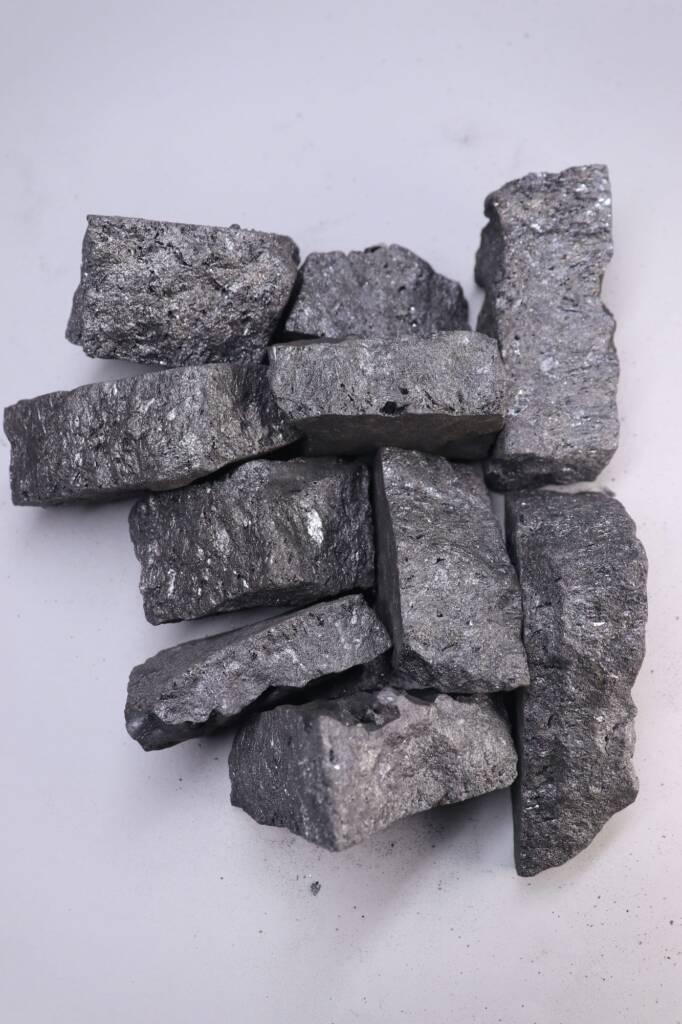
Ferro Chrome
Low & Medium Carbon
Low Carbon Ferro Chrome is an essential alloy used primarily in the production of stainless and heat-resisting steels where the carbon content must be kept to a minimum without sacrificing the chromium levels.
Advantages
- Precise Carbon Control: Allows steelmakers to reach exact specifications for low-carbon grades of steel (like 304L or 316L) without the need for expensive decarburization processes.
- Corrosion Resistance: High chromium purity ensures the formation of a stable passive oxide layer on the steel surface.
Enhanced Weldability: Lower carbon prevents chromium carbide precipitation during welding, which protects the steel from intergranular corrosion.
Production Process
The production of LC FeCr is more complex than standard high-carbon varieties because carbon has a high affinity for chromium.
- Silicothermic Reduction: This is the most common method. Chromium ore is reduced using Ferro Silicon Chrome in an electric arc furnace.
- The Process: Lime and chrome ore are melted to create a slag, which is then reacted with ferro silicon chrome. Through this chemical exchange, the silicon reduces the chromium oxides, resulting in a product with very low carbon (typically between 0.03% to 0.15%).
- Refining: Further vacuum treatment may be used to achieve ultra-low carbon grades.
Applications
- Stainless Steel Production: Used in “L” grade stainless steels (e.g., 304L, 316L).
- Superalloys: Critical for aerospace and gas turbine components where high-temperature strength is required.
- Acid-Resistant Steels: Utilized in the chemical and pharmaceutical industries for equipment that handles corrosive materials.
